AICA Academy is a programme of residencies, encounters and training in contemporary art criticism, held to mark the 58th AICA International Congress in Rennes. This French-language edition is designed for young professionals from all backgrounds, including art historians, artists and curators, who are active worldwide, with priority given to candidates from the African continent. As an NGO, AICA International thereby contributes to UNESCO's priorities on education, gender equality, cultural diversity and freedom of artistic expression.
Ten participants were selected following a call for applications to join the AICA Academy. They were selected by the members of the scientific committee, composed of Marcelline Delbecq, Géraldine Gourbe, Oulimata Gueye, Dilda Ramazan, Sonia Recasens and Mathilde Roman.
Over ten days, participants will take part in a collaborative workshop combining theoretical and practical experimentation. Together, they will reflect on the current challenges facing art criticism in an ecological and social context, questioning how narratives around history, memory and identity are constructed and examining our relationship to archives and minority narratives. Literary creativity and expanded forms of writing will also be encouraged.
Thanks to partnerships with local institutions and professional networks, notably Les Archives de la critique d’art (ACA), Documents d'artistes Bretagne (DDA), FRAC Bretagne, l’École des Beaux-Arts de Bretagne and Université Rennes 2, participants will take part in training modules, writing workshops and encounters with regional and international art critics and thinkers, as well as visits to exhibitions and artists' studios.
The programme is initiated and led by Sonia Recasens, Director of AICA International, and Mathilde Roman, Vice-President of AICA International.
Meet the selected participants
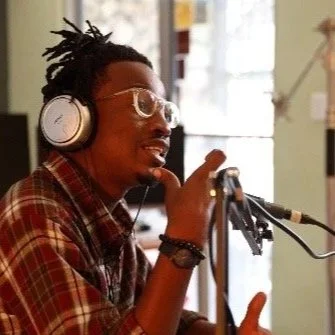
Ervenshy Hugo Jean Louis is an art critic based in Haiti. He publishes in journals and online platforms dedicated to contemporary Afro-diasporic visual arts, including Contemporary And and AICA-Southern Caribbean. He coordinates KWAZMAN, a series of conversations initiated by AICA-Southern Caribbean that brings together artists, researchers, and audiences across the Caribbean region. He is a member of the International Association of Art Critics (AICA International) and AICA-Southern Caribbean. His participation in Burnaway’s Critical Writing Incubator (2026) and Contemporary And’s Critical Writing Workshop (2024) has enabled him to develop a critical writing practice attentive to the circulation of ideas and practices, as well as to the dynamics shaping Afro-Caribbean art scenes. In 2023, he co-founded La Semaine de l’Art Contemporain with Akoustik Prod, an event designed to foster discussions and reflections on contemporary art in Haiti. His critical practice focuses on the forms of counter-narratives employed by Caribbean artists to develop, from their own contexts, alternative narratives about their realities.
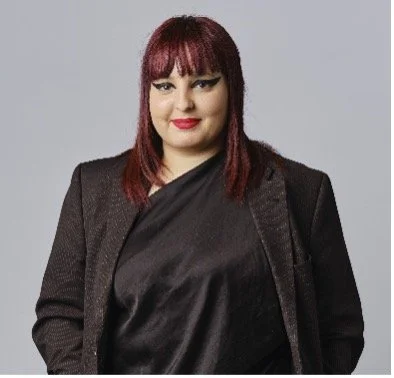
Hasnae Lachgar is the Artistic and Partnerships Director at a foundation in Casablanca, Morocco. She was born in 1992 in Salé and is based in Casablanca. A graduate of the Casablanca School of Fine Arts, she has been developing a curatorial practice since 2019 centered on the design of exhibitions, public programs, and cultural mediation initiatives. She notably supports projects in dialogue with Moroccan and international artists, paying particular attention to forms of narration and the conditions under which exhibitions are produced. Her work is part of a reflection on the ways in which artistic narratives are constructed, circulated, and transmitted in contemporary contexts. She is interested in spaces where linguistic, cultural, and social differences become grounds for dialogue, and in the exhibition as a place of connection, memory, and the production of shared meaning.
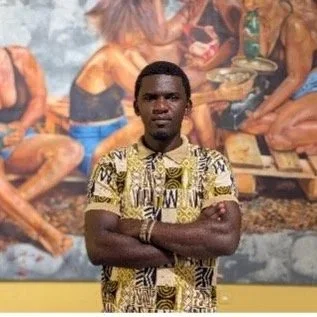
Ismail Nsangou Ntenjemgnigni is an assistant curator and cultural outreach coordinator at Espace doual’art. A graduate of the Institute of Fine Arts at the University of Dschang in Foumban, he holds a bachelor’s degree in heritage and museology and a master’s degree in heritage and arts project management. He has participated in several projects, notably serving as an assistant curator for the exhibitions Carrefour Spirituel (2024) and Pe(a)nser le Vivant (2025) at doual’art. He also contributed to the exhibition Il était une fois la naissance du Staat Kamerun (1884–1914) as a cultural mediator and educator. In 2019, he took part in the conservation/restoration project for the cultural assets of the Bamoun Kings’ Palace Museum, conducted in collaboration with the Rietberg Museum (Switzerland). His practice centers on cultural mediation, conservation, and art criticism. He explores the sustainability of African art through the media platform Instant de l’Art, of which he is a founder. He is the winner of the art criticism award at the 2025 International Contemporary Art Encounter in Brazzaville and the second prize at No’ocultures 2025.
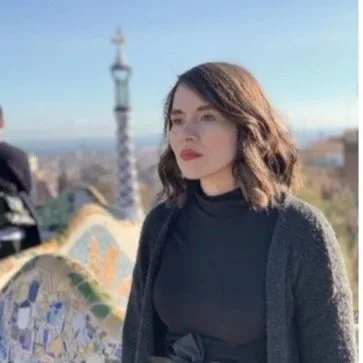
Juliana Mendonça do Vale is a researcher at the Pinacoteca de São Paulo, where she works with collection research, documentation, cataloguing, and exhibition projects focused on contemporary art and institutional histories. She holds a BA in Visual Arts and an MA in Museology from the University of São Paulo (USP). Her research examines the reception and institutionalization of performance art in Brazilian museums between the 1960s and 1980s, with emphasis on exhibition histories, acquisition policies, and documentation practices related to time-based and ephemeral artworks. At Pinacoteca, she contributed to collection-based exhibitions, conducted provenance research for Lygia Clark: Project for a Planet (2024), and participated in organizing the international seminar Identities and Life Stories in Museum Collections. In 2025, she published the essay Between Temple and Forum in Pinacoteca de São Paulo: 120 Years and was selected as a Travel Grant recipient for the CIMAM Annual Conference in Turin.
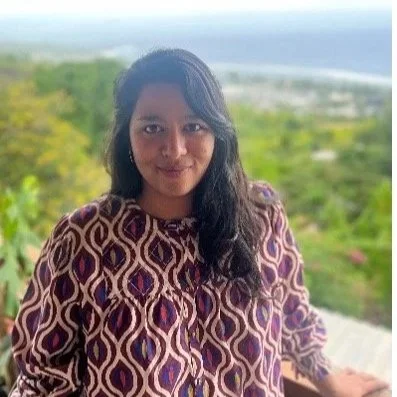
Anna Vrinat is a curator, art critic, and consultant whose practice is rooted in the study and promotion of Réunion’s art scene. She has developed an authorial approach that is attentive to insular contexts, blending critical writing, curatorial research, and the development of cultural policies. From 2022 to 2025, she led curatorial projects, public engagement programs, and project management initiatives at Frac Réunion. She currently continues her fieldwork as a liaison mediator for the Société des Nouveaux Commanditaires in Réunion. Also a recipient of the La Relève program, she is a member of the Board of Bla! (the national association of contemporary art mediation professionals) and serves as an alternate for Marie Plagnol on the CIPAC Board of Directors.
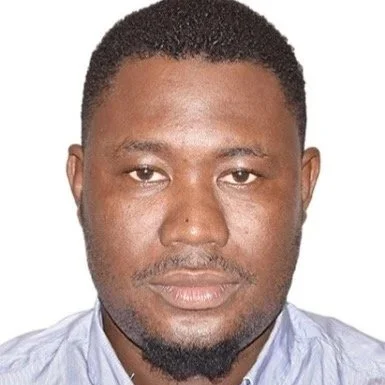
Jeff Eliot Josaphat Eric Atchado is an independent curator, cultural mediator, cultural entrepreneur, and gallery manager based in Benin. He is the founder of Nùdídé, a platform dedicated to the promotion, mediation, and celebration of contemporary African art. His practice lies at the intersection of curation, art criticism, and cultural project development. He is particularly interested in issues related to the circulation of artworks, heritage, transmission, and cultural sovereignty in contemporary African contexts. Through his projects, he supports artists, designs innovative outreach initiatives, and helps build local artistic ecosystems. His work aims to foster dialogue between contemporary art, audiences, and institutions, while developing a critical reflection on current issues in African art.
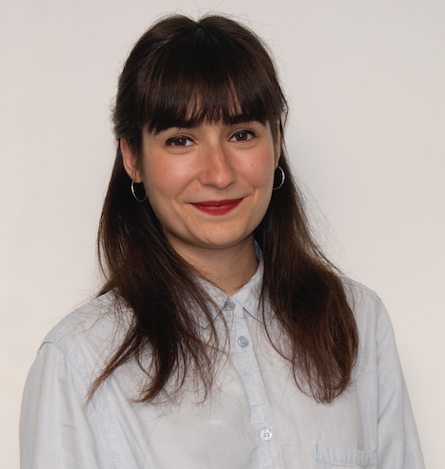
Anaïs Fa is an independent curator and journalist based between Paris and Casablanca. After studying art history and philosophy, she moved to Morocco, where she curated and produced her first group exhibition, Serendipity, in 2019. Other projects followed, such as Rituels in 2020 in Casablanca and Slippery Slope in 2024 in Marrakech. In 2022, she co-founded an artist residency within Casablanca’s Central Market.
Driven by a desire to put art back at the heart of the city, she set out to showcase the work of emerging Moroccan artists and foster exchanges with merchants, customers, and passersby who frequent the market. Her work lies at the intersection of site-specific creative practices, postcolonial artistic narratives, and mechanisms of cultural transmission. She is particularly interested in the dialogues between contemporary artistic practices and cultural heritage, exploring their tensions and resonances. In her projects, she prioritizes curatorial frameworks that encourage transdisciplinary exchanges and adopt collaborative approaches.
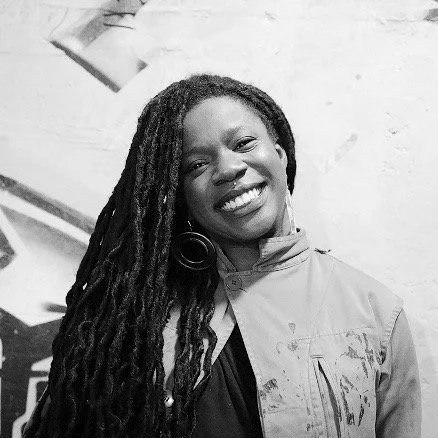
Trinity Njume-Ebong is a curator, researcher, and DJ specializing in the history of modern music and cultural anthropology. Her goal is to draw parallels between pre-colonial African traditions and post-colonial expressions of the Black diaspora. This fascination can be explained by her own background, which saw her grow up caught between the tensions of a traditional West African immigrant household and the depths of the alternative, semi-legal, and improvised cultural scene of her hometown, Geneva. She never shies away from drawing on her personal experience as a working-class member of the Black immigrant community, as well as her understanding of the historical necessity for this community to come together, resist, and express itself under such conditions, in order to cast a critical eye on the current hyper-commercialization and whitewashing of these subcultures, which were once rejected by those who predominantly practice them today. Trinity is a renowned vocal critic in her hometown, where she is both feared and admired for her sharp tongue. Among her many independent activities, she is currently a member of the City of Geneva’s Visual Arts Funding Commission, a curator for the Visual Estate of Lee “Scratch” Perry, and a cultural mediator for the DUBQUAKE festival organized by O.B.F. Sound System in Geneva.
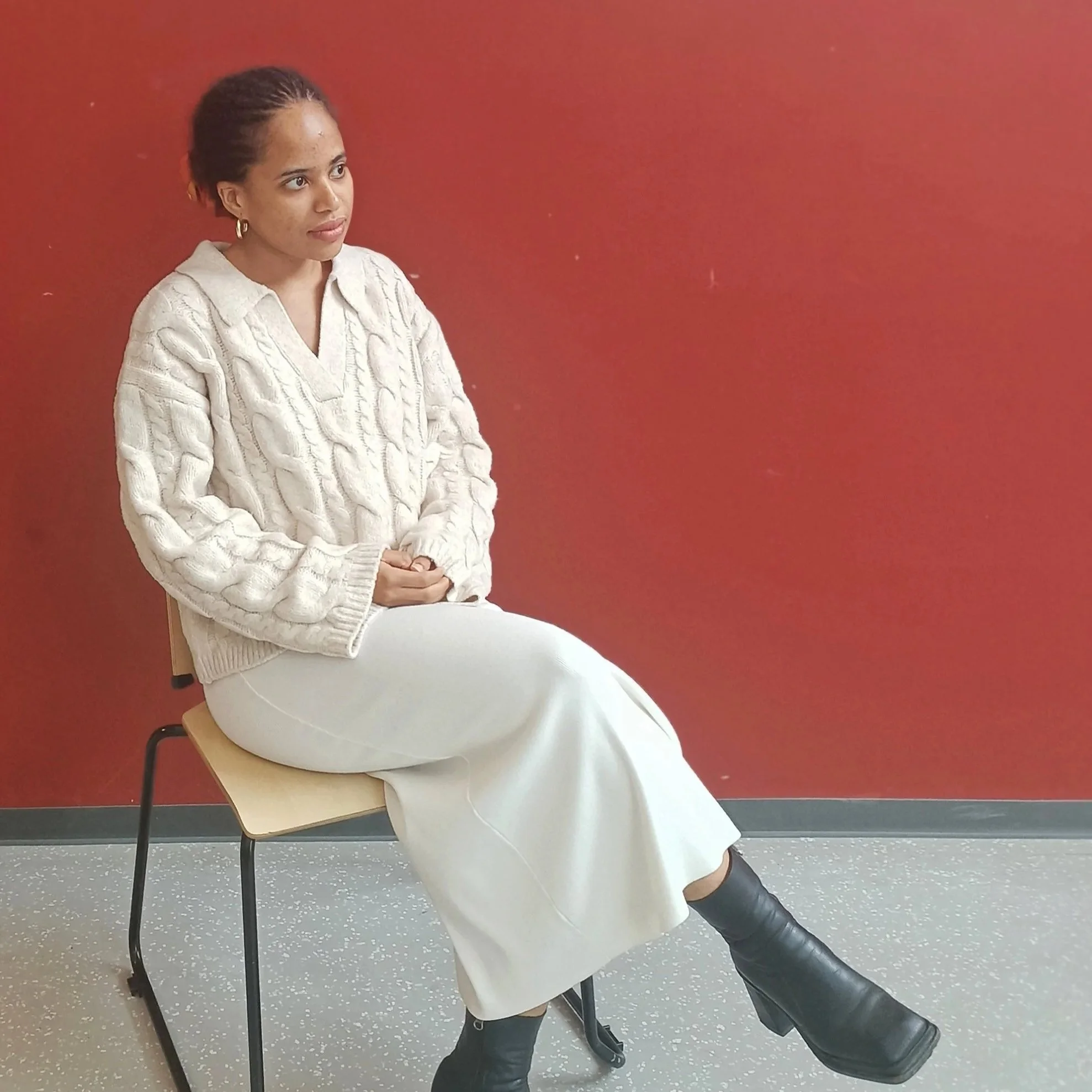
Maéva Conderolle Néris is a French artist and independent curator. She has developed expertise in contemporary photography, post-black art, and queer ecologies. Her aim is to better understand the Afro-Caribbean vantage standpoint when it comes to the redefinition of landscape, its practices and its photographic representation in postcolonial contexts. This was notably reflected in her projects during the 2023-2024 post-diplôme program at the ENSBA Lyon under the supervision of Oulimata Gueye. Her curatorial work and her writing are permeated by a concern for landscape, power struggle and visual culture. This was at stake in the contributions she made last year as part of the post-graduate program L’Art Contemporain et son Exposition at Sorbonne Université. In addition to her independent research, she collaborates frequently with visual artists in France and abroad, and has worked with major French cultural institutions (such as the Cnap and the Centre Pompidou).
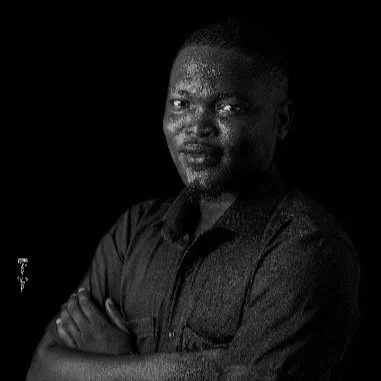
Steven Coffi Adjaï is a Beninese curator, art critic, and writer. His work lies at the intersection of critical thought, poetic philosophy, and contemporary curatorial practices. He conceives of the exhibition as a space for writing, memory, and resistance, where the tensions between history, the imagination, and creation are revealed. Since 2018, he has been developing his practice at Gallery Charly, transforming the exhibition space into a site for research and experimentation. His reflections focus in particular on colonial and postcolonial legacies, marginalized narratives, and ways of re-enchanting the world. He has participated in several curatorial training programs, notably at Ségou’Art (2023) under the direction of Simon Njami and at the Angels & Muses Foundation (2024). He is co-curator of the Rencontres Contemporaines de Cotonou and a member of its African advisory board.
The Archives of Art Criticism (ACA) is Europe’s leading resource center dedicated to the preservation, study, and promotion of archives of contemporary art criticism. Founded in 1989 in Rennes on the initiative of Jean-Marc Poinsot, in collaboration with the International Association of Art Critics (AICA), the ACA collects the personal archives of art critics and various figures in the contemporary art scene. Since 2014, the ACA has been organized as a Scientific Interest Group (GIS) bringing together the University of Rennes 2, the National Institute of Art History (INHA), and AICA International. Their collections, which also include a large, specialized library, offer an exceptional record of the networks, debates, and practices that have shaped art since the second half of the 20th century. Open to both the academic community and professionals in the arts and culture, the ACA carries out research, publishing, digitization, and knowledge dissemination activities, thereby helping to establish art criticism as a cultural heritage asset and a field of research.
L’École des Beaux-arts de Bretagne is a public institution of higher education in art and design, accredited by the Ministry of Culture and the Ministry of Higher Education, Research, and Space, with campuses in Brest, Lorient, Quimper, and Rennes. The school welcomes nearly 850 students each year, supported by a faculty of 110 instructors. It is currently the largest art and design school in France in terms of enrollment, rooted in a region rich in creativity and research.
Since 2009, Documents d’artistes Bretagne (DDA Bretagne) has been publishing monographic dossiers in collaboration with Breton artists. Fully accessible online, these dossiers help promote their artistic practices and offer a glimpse into a dynamic regional art scene. Committed to supporting the artists in its collection, DDA Bretagne accompanies them throughout their careers and mobilizes networks of professionals around their practices and projects.
Since 1981, Frac Bretagne has been building a public collection of contemporary art (now comprising nearly 6,000 works), showcasing it throughout the region of Brittany, and fostering access to the arts for everyone. Its initiatives take the form of numerous projects—including participatory workshops, artist residencies, and exhibitions—carried out in the fields of education, healthcare, disability services, and social work across the Brittany region. Frac Bretagne also serves as a venue for exhibitions, community life, and artistic expression, rooted in the Beauregard neighborhood of Rennes. Frac Bretagne thus serves as a public service organization committed to the social and ecological transformation of culture.
The AICA Academy 2026 booklet is available to read and download in French.