
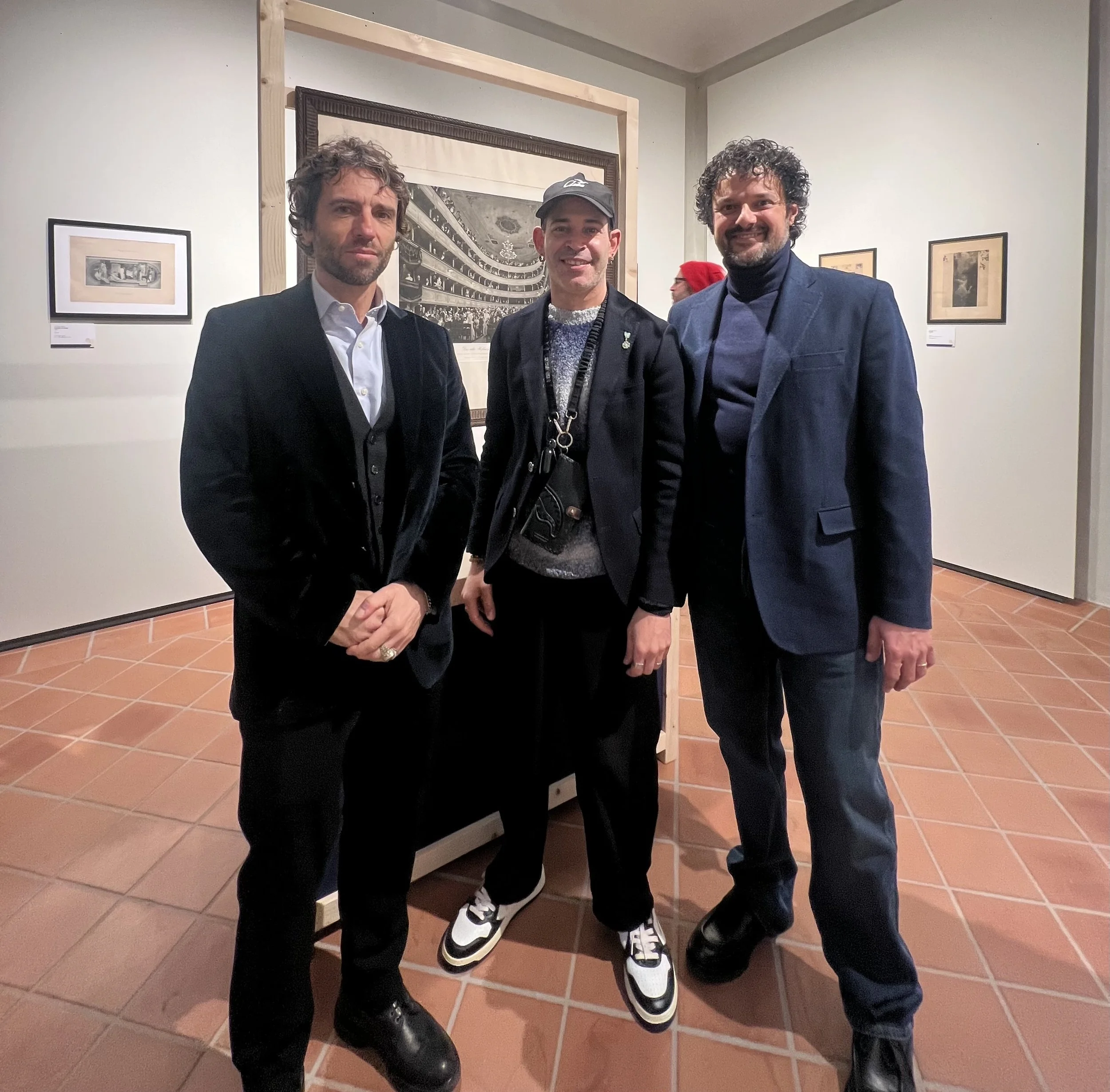
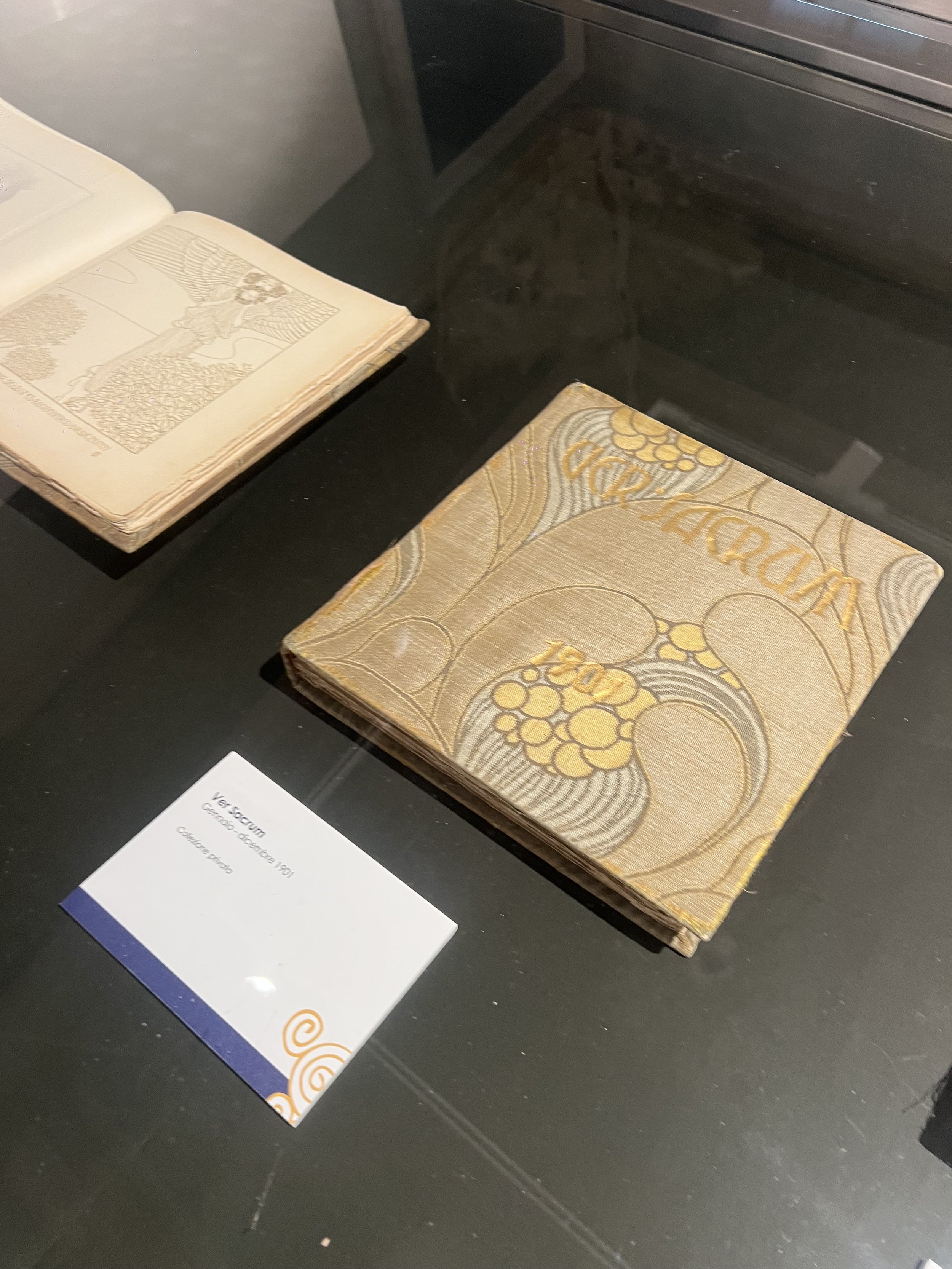
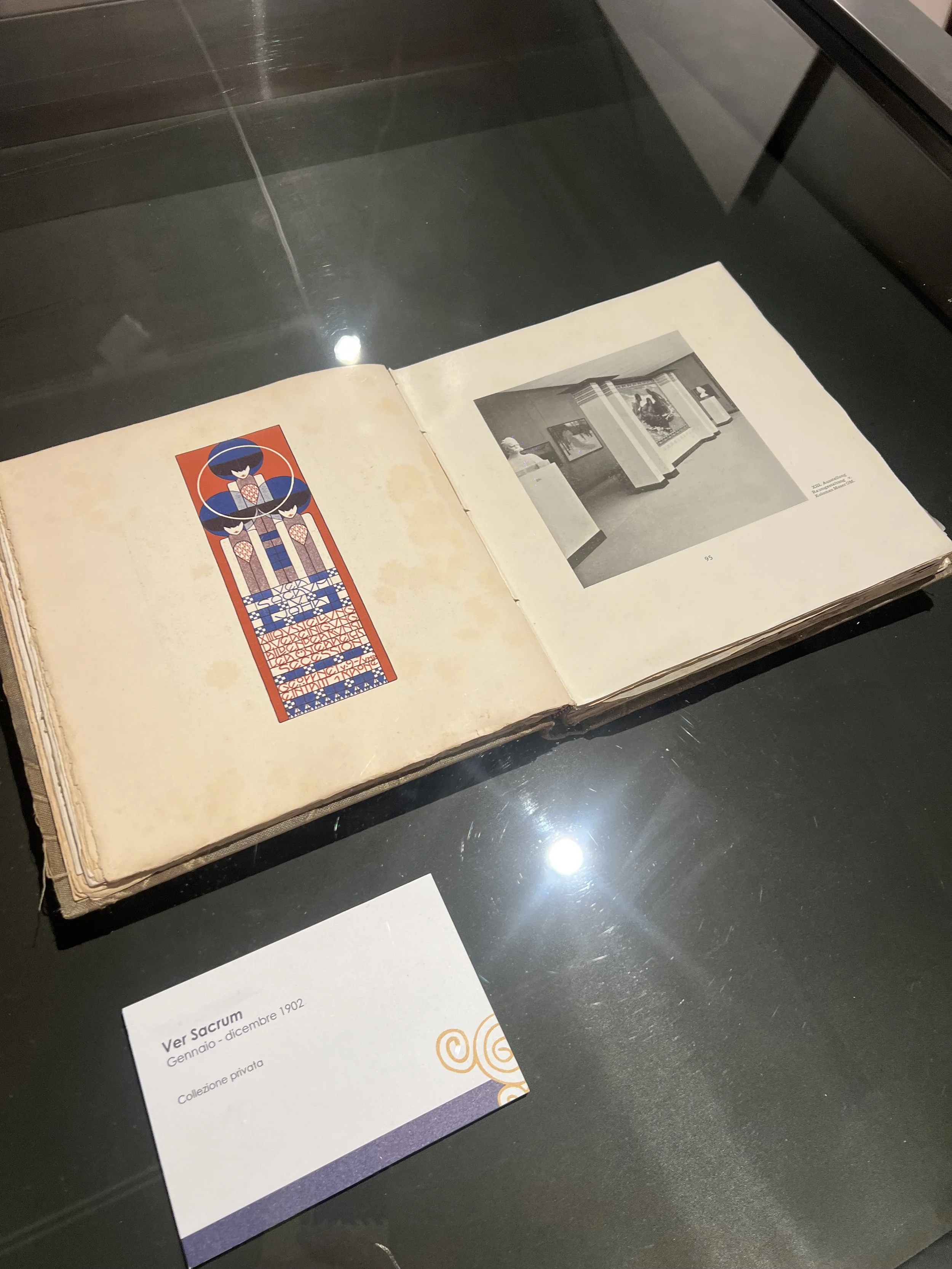
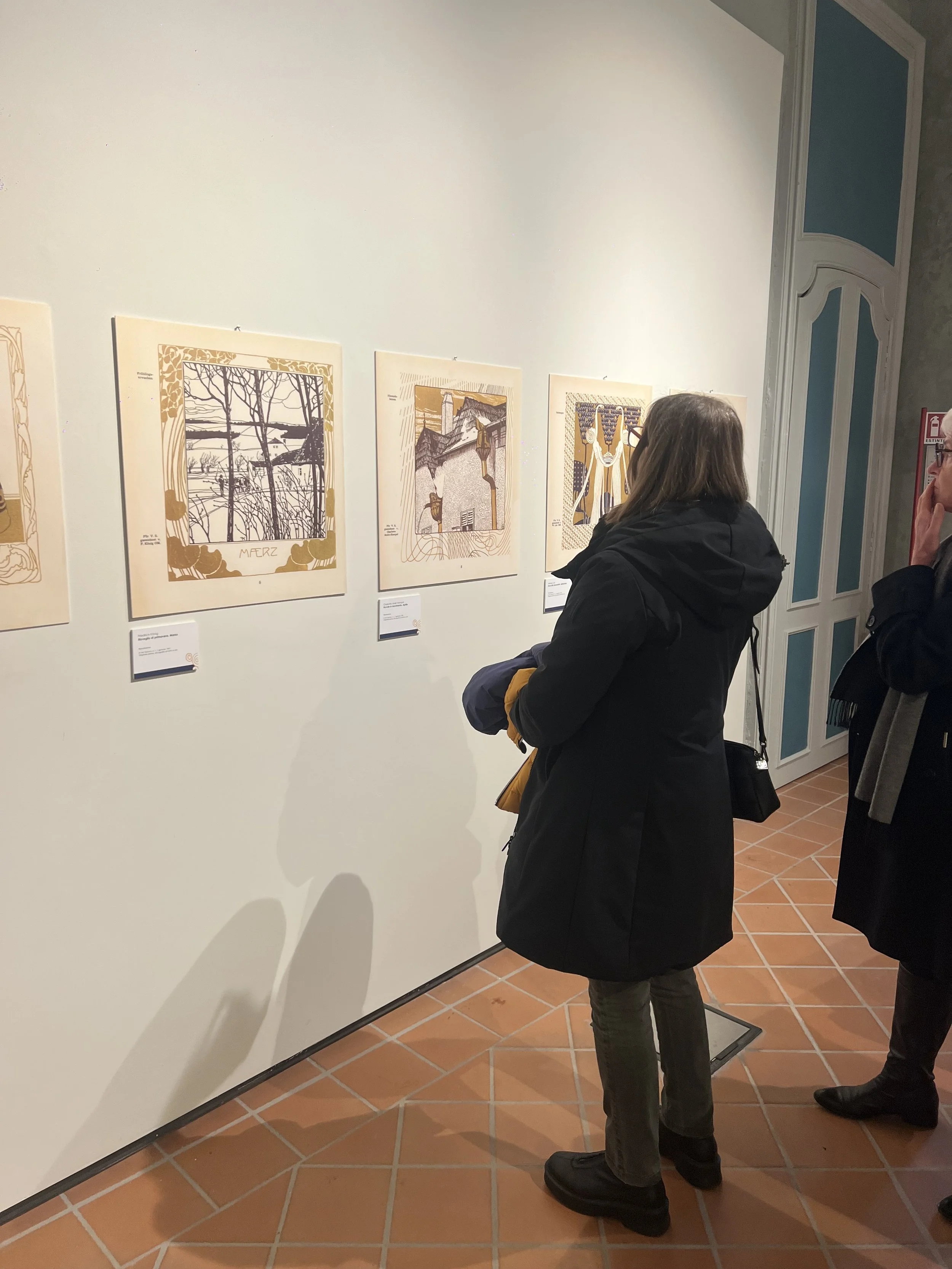
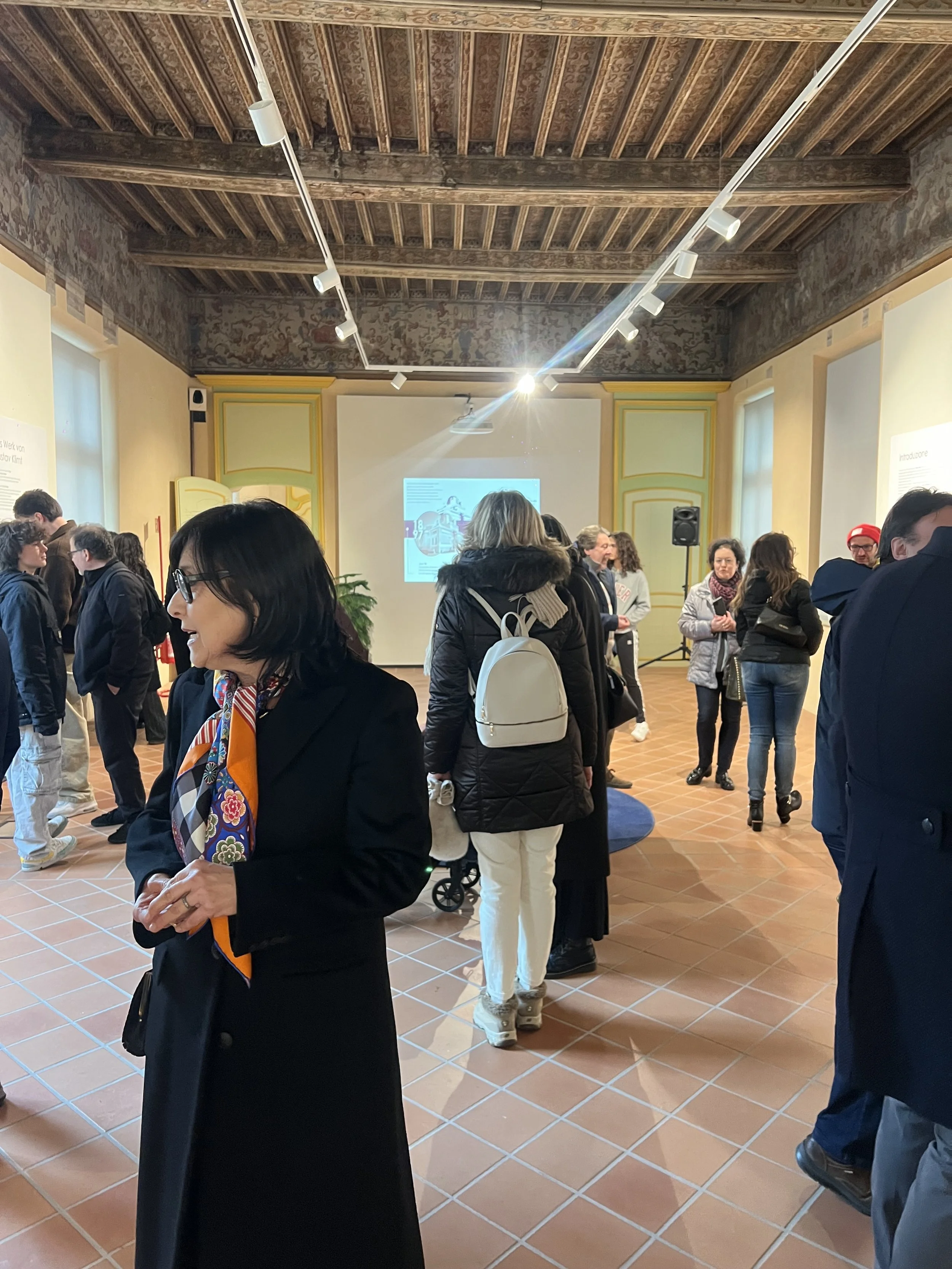
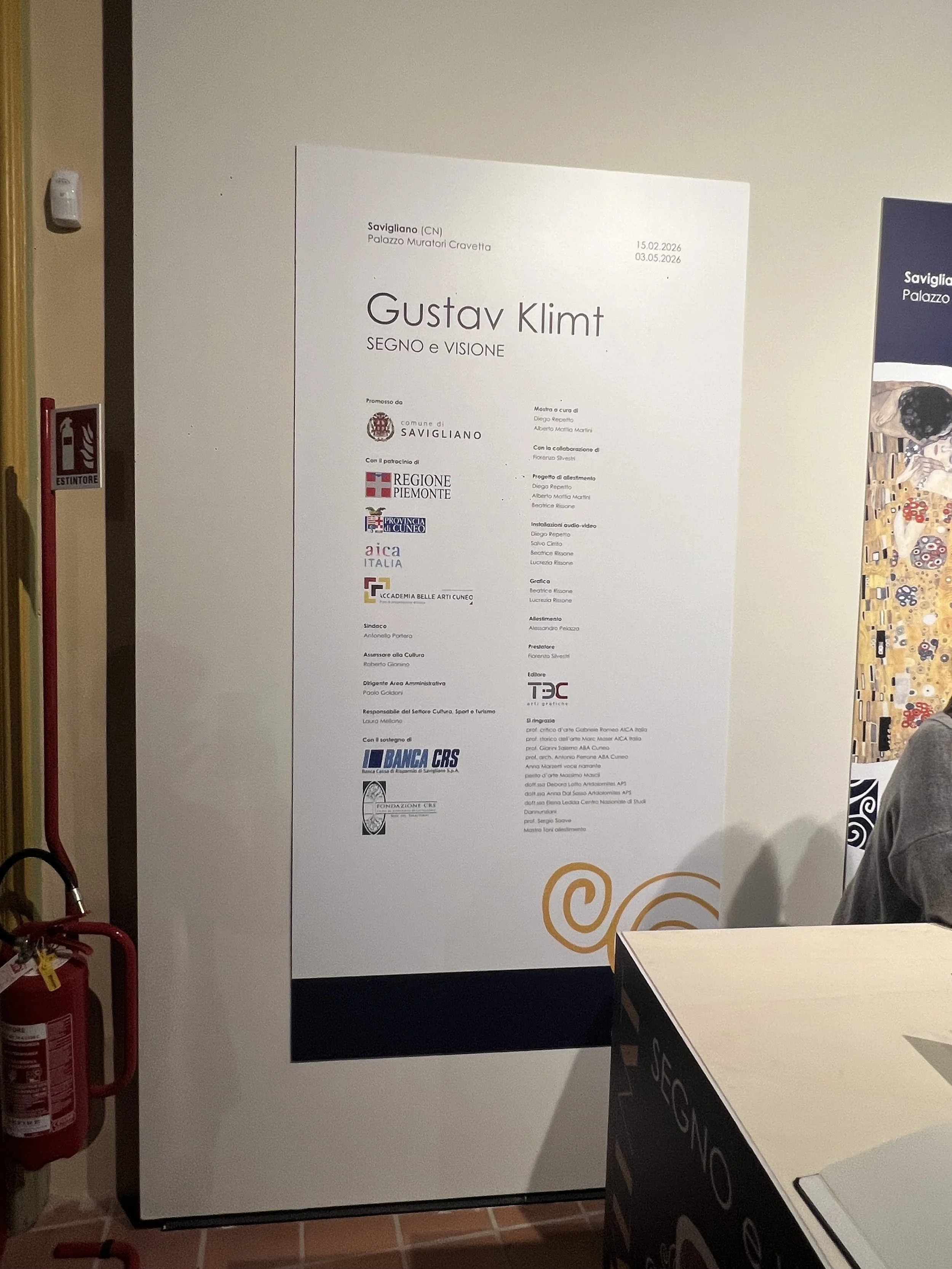
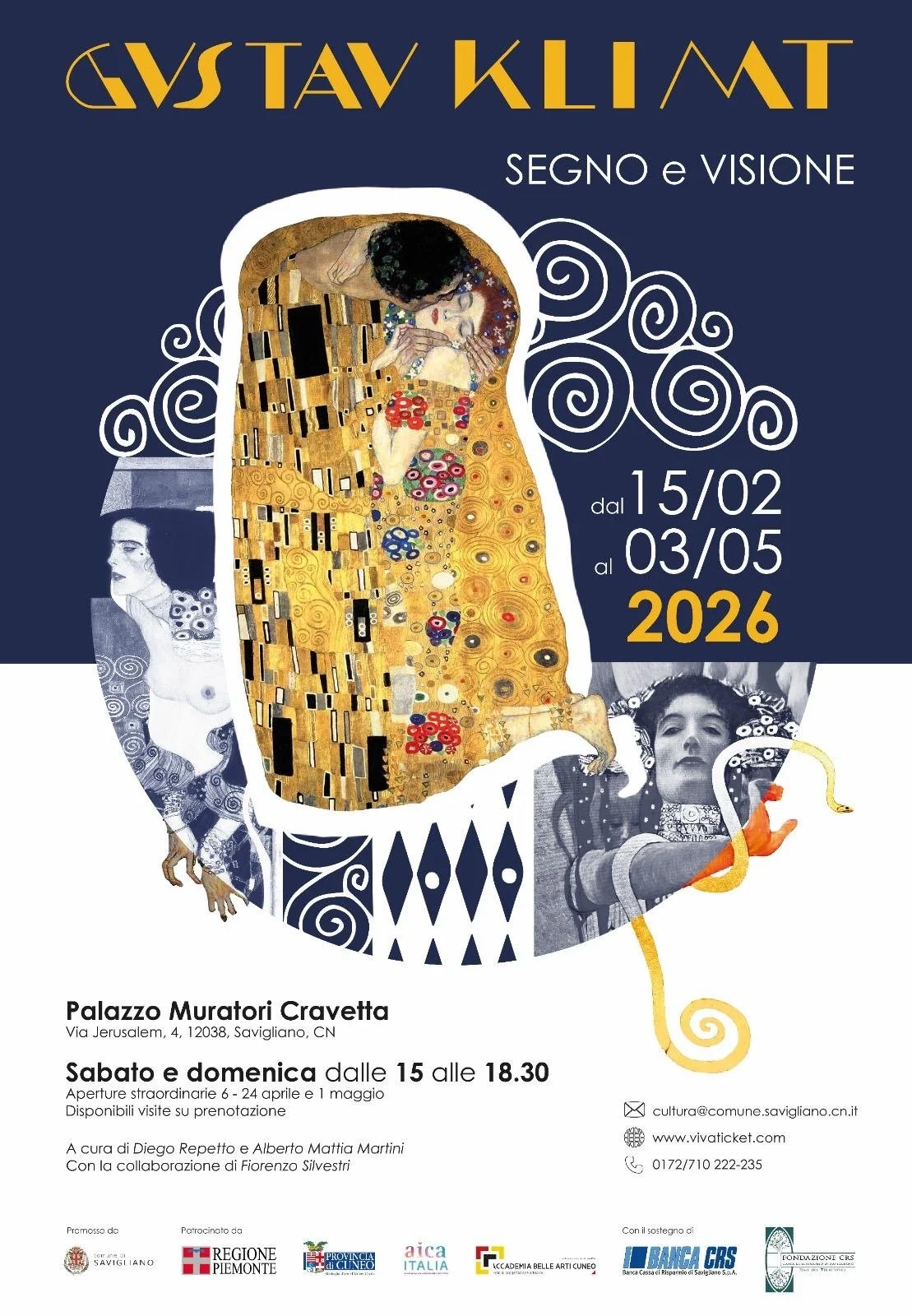
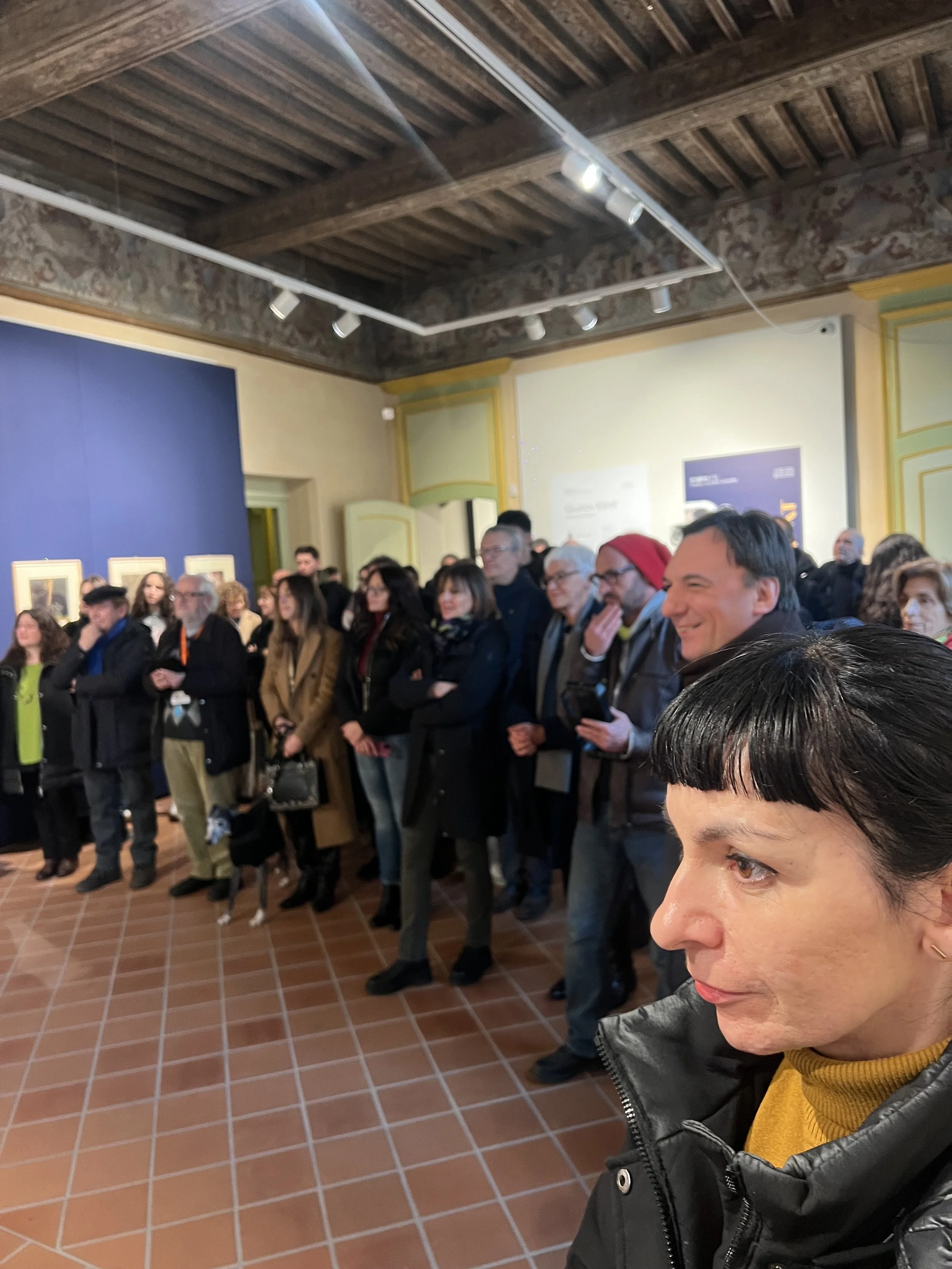
The exhibition “Segno e Visione” (Sign and Vision), inaugurated on 13 February 2025 at Palazzo Muratori Cravetta in Savigliano (CN), Italy, offers a scientifically grounded yet accessible reinterpretation of Gustav Klimt’s graphic work, with particular emphasis on linearity and the structural role of the drawn mark.
Curated by Diego Repetto, co-curated by Alberto Mattia Martini, and enriched by loans from the collection of Fiorenzo Silvestri, the exhibition explores a key yet sometimes less examined dimension of Klimt’s production: graphic research as a conceptual and formal laboratory. Through the collotype technique—capable of faithfully reproducing tonal subtleties and linear precision—the display highlights the clarity of Klimt’s line, the dynamic tension between abstraction and figuration, and the synthetic strength of his visual language.
The curatorial framework demonstrates how the drawn mark, far from being merely preparatory, functions as an epistemological device within Klimt’s practice—an instrument for investigating the body, nature, and symbolic space. His linearity emerges as the structural foundation of the image and anticipates modern developments in dialogue with early twentieth-century avant-garde movements.
AICA Italia supported the initiative by granting its patronage in recognition of the project’s high historical and scholarly value. On the occasion of the opening, the President of AICA Italia, Gabriele Romeo, contributed to the exhibition catalogue, emphasizing Klimt’s importance within European visual culture, alongside an essay by Marc Michael Moser.
The exhibition thus stands as a scholarly yet outward-looking project, designed to engage a broad and inquisitive audience interested in exploring the aesthetic and semantic trajectories of one of the leading figures of European artistic modernity. Members of AICA sections are granted free admission.
L’exposition « Segno e Visione » (Signe et Vision), inaugurée le 13 février 2025 au Palazzo Muratori Cravetta à Savigliano (CN), en Italie, propose une relecture scientifiquement fondée mais accessible de l’œuvre graphique de Gustav Klimt, en mettant l’accent sur la linéarité et la fonction structurante du signe.
Commissariée par Diego Repetto, avec la co-commissariat d’Alberto Mattia Martini, et enrichie par le prêt de la collection de Fiorenzo Silvestri, l’exposition explore une dimension essentielle mais parfois moins étudiée de la production klimtienne : la recherche graphique comme laboratoire conceptuel et formel. Grâce à la technique de la collotypie — permettant une restitution fidèle des nuances tonales et de la précision linéaire — se révèlent la sobriété du trait, la tension entre abstraction et figuration, ainsi que la puissance synthétique du langage visuel de l’artiste.
Le parcours démontre que le signe, loin d’être un simple élément préparatoire, constitue chez Klimt un véritable dispositif épistémologique : un outil d’exploration du corps, de la nature et de la dimension symbolique. La linéarité klimtienne apparaît comme la structure fondamentale de l’image et anticipe des développements modernes en dialogue avec les avant-gardes du début du XXe siècle.
AICA Italia a soutenu cette initiative en accordant son patronage en raison de sa haute valeur historique et scientifique. Lors de l’inauguration, le Président d’AICA Italia, Gabriele Romeo, a contribué au catalogue en soulignant l’importance de Klimt dans le contexte de la culture visuelle européenne, aux côtés d’un texte critique de Marc Michael Moser.
L’exposition se présente ainsi comme un projet scientifique à vocation pédagogique, destiné à un public large et curieux, désireux d’approfondir les parcours esthétiques et sémantiques d’une figure majeure de la modernité artistique européenne. Les membres des sections AICA bénéficient d’une entrée gratuite.