By Tessel Janse, PHD Candidate in Cultural Studies at Goldsmiths, University of London and art critic, AICA Netherlands
Though European colonialism officially ended due to the decolonisation movements of the twentieth century, its underlying structures continue to linger. Peruvian sociologist Aníbal Quijano wrote that in addition to the erasure of Indigenous peoples and the extraction of resources, under colonialism European culture and its values became a universal model for progress and modernity. He named this repression of other knowledges ‘coloniality’, a world order that remains firmly in place today. ‘Decoloniality’, then, is theorised by Latin American thinkers such as Walter Mignolo and María Lugones as the creation of a world where multiple knowledges can coexist and where repression through categories of race, gender, coloniser and colonised is abolished. The discussion of (de)coloniality is one geographically specific tradition of thought amongst many that call for the need to decolonise ongoing colonial power dynamics existing in discrimination, the flow of capital to former imperial centres, and in cultural and political institutions both in the ‘West’ and Global South.
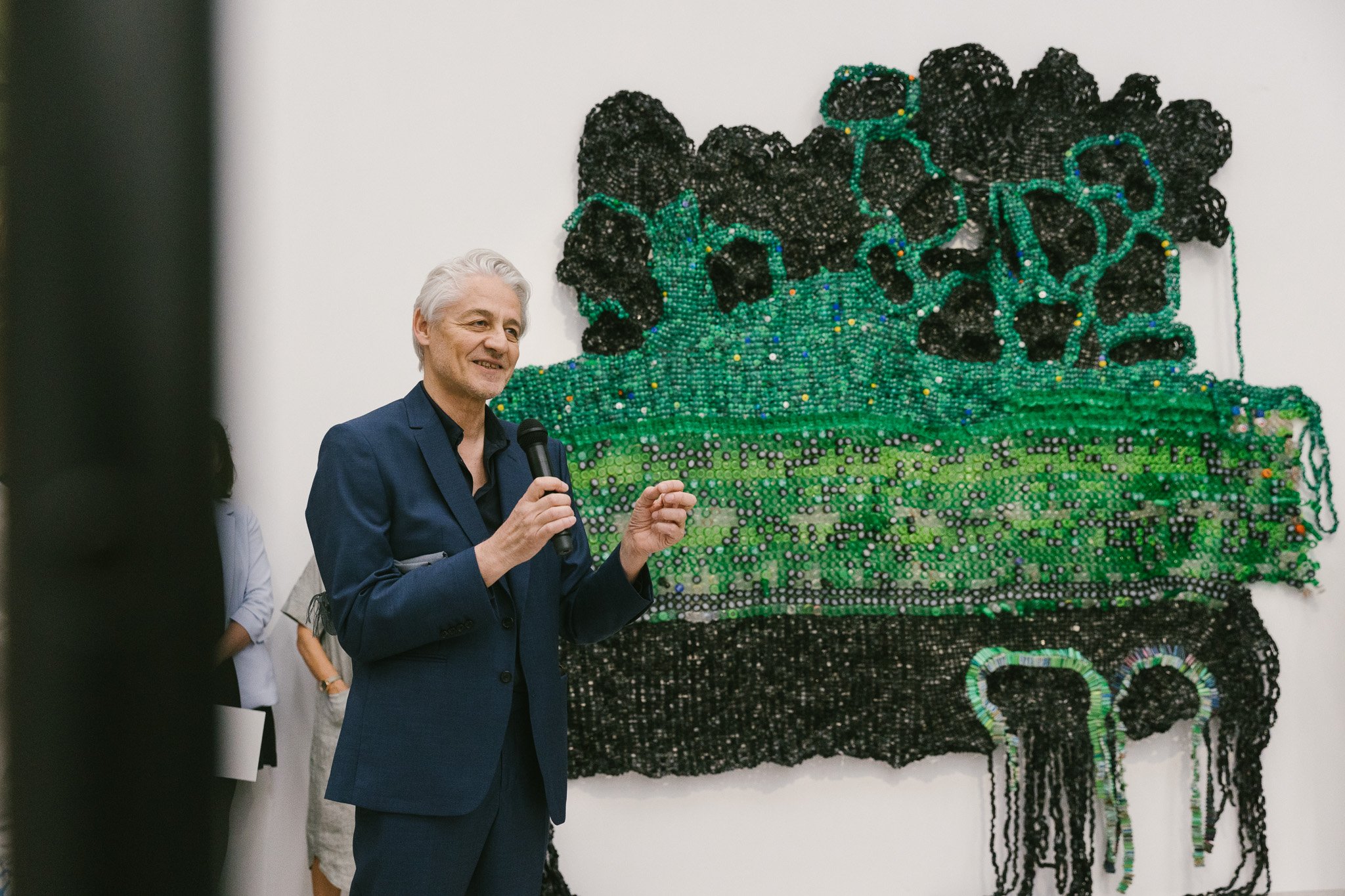
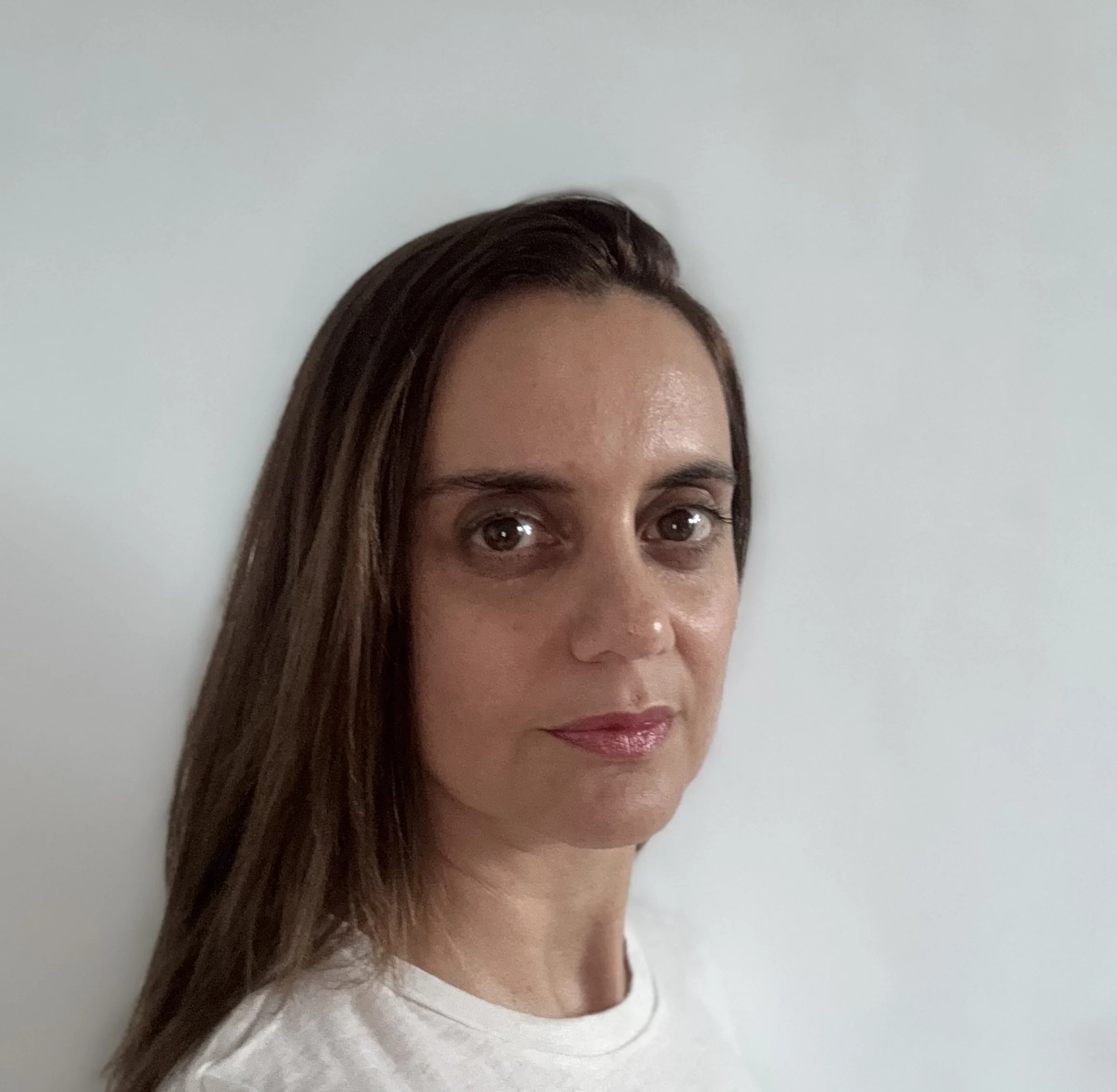
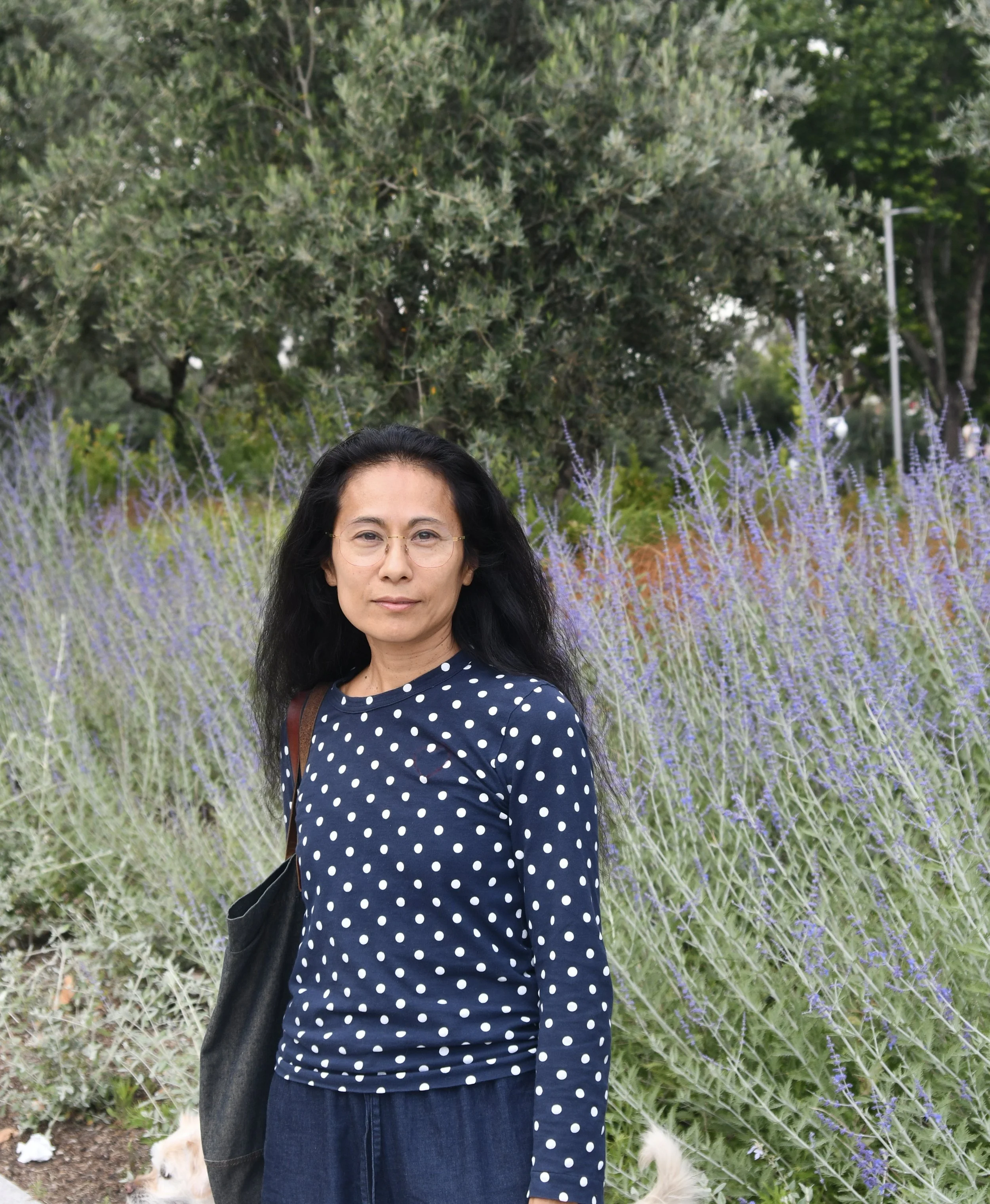
For its fifth and final iteration of the ‘Ruptured Histories’ webinar series, AICA looked towards the role of art in critically examining enduring colonial extraction and erasure of identities, and for continuing the work of decolonisation. Chaired by International board member Robert-Jan Muller, AICA invited curator Christian Kravagna to introduce and respond to the session, and artists Paula Albuquerque and Sandra Gamarra Heshiki to share their work. They reflected on strategies for reinventing postcolonial identities, refusing the imperial gaze and rethinking the silences in museums and archives. Taken together, their contributions showed that there are as many understandings of decolonisation as there are histories of resistance against colonialism.
In his opening talk Kravagna, art historian, curator and professor of Postcolonial Studies at the Academy of Fine Arts in Vienna, focused on time and temporality. He invoked Kenyan author Ngũgĩ wa Thiong’o, to argue that one cannot imagine a decolonised future without awareness of historical emancipation struggles. During the preparations for his 2024 exhibition Avant-Garde and Liberation: Contemporary Art and Decolonial Modernism at MUMOK, Vienna, Kravagna learnt that for many Black artists and artists from the Global South, the notions of ‘history’ and a future that is free of colonialism are problematic. Especially for those living in the wake of transatlantic slavery and colonial violence, the past will always remain part of the present and continues to determine future possibilities. At the same time, art is a crucial form of negotiation, resistance, refusal and remaking of identities, as is also described by Black Studies scholar Christina Sharpe. Bringing in several artists who participated in the MUMOK exhibition, Kravagna sketched how they returned to earlier civil rights movements and key actors in anti-colonial resistance, for instance during the Haitian Revolution (1791-1804), andthe Négritude movement and Harlem Renaissance of the 1920s and 1930s. Even if these social movements were at some point discontinued, the work of artists such as Radcliffe Bailey, Janine Jembere and Fahamu Pecou shows that they never really belong to the past.
After Kravagna’s curatorial perspective, Albuquerque shared her artistic practice of intervening in archival colonial non-fiction films, finding ways to decolonise and emancipate the colonial subject within the frame. As a Portuguese artist and scholar working in Amsterdam, she explores how Dutch and Portuguese pseudo-ethnographic footage in the archives of the EYE Film Museum and the Cinemateca Portuguesa reflects imperial visual imaginaries. Perpetuating stereotypes of benevolent colonisers and of the docile colonised in Indonesia, Goa and East Timor gratefully accepting the civilising mission, these films erased any sign of resistance. The portrayal of landscapes as vast and wild and available for exploration, became part of propaganda narratives that legitimised extraction. Moreover, these films relied on a spectacle of visibility and unconsented access which is recycled in contemporary surveillance practices. In her films Siluman: Stealth, Invisible, Ghostly, Phantom-like (2024) and Like the Glitch of a Ghost (2023), the repressed perspective of the colonised haunts the idealised image of late-stage colonial societies. In Siluman, the spectre exists as a disembodied voice-over, demanding acknowledgement of its presence. In Like the Glitch of a Ghost, Albuquerque covers Indigenous subjects with a programmed glitch pattern. Refusing hyper-visibility and objectification in reference to what Martinican philosopher Édouard Glissant called ‘the right to opacity’, the reworked footage instead brings the gestures and behaviours of the coloniser into stark focus. It frames the framer, as it were. When the representation of the colonised in an archive further represses their perspective, which postcolonial theorist Gayatri Chakravorty Spivak defined as a process of ‘subalternisation’, Albuquerque finds agency in the refusal of the colonial gaze. The question remains – also identified by an audience member – whether covering the colonised by a glitch or making them present through a voice-over, is another form of subalternisation. After all, it involves replacing them, speaking for them, and deciding in their place. Albuquerque’s engagement with the multilayered violences of films and archives shows that in the aftermath of colonialism, there is no such thing as a simple solution. When we cannot look away from these archives or from the past, we can at least find ways to treat the people portrayed in them more respectfully. In an exhibition opening in EYE in February 2026, we will see Albuquerque’s latest work and learn more about how this pertains to surveillance practices and their perpetuation of a racialised colonial order today.
Peruvian artist Gamarra Heshiki contextualised her transformation of the Spanish Pavilion into the Migrant Art Gallery for the 2024 Venice Biennale. As the first non-Spanish artist to represent Spain, she drew from her mestizo heritage: a term that in Latin America refers to persons of mixed European, Indigenous and/or African descent. With a mestizo father and her mother descending from Japanese immigrants, Gamarra Heshiki experienced how the dominance of European culture in her education implied a type of erasure, a disavowal of difference in favour of a universal canon that could unite all of Peru’s diverse peoples. To become an artist meant to learn from the classics, to look towards Europe as the centre of history. Amazonian and Andean art was simply not considered. When she moved to Spain and visited Madrid’s museums, however, she found no trace of contact with Latin America. Thefamous mestizo paintings, which portrayed mixed-race families to classify the social status of their children, were stored away in the depot of the National Museum of Anthropology despite its slogan ‘nosce te ipsum’ (‘know yourself’). When colonialism’s mixing of cultures in practice means the devouring of one culture by the other, its plunder and subsequent erasure, Gamarra Heshiki set out to understand mestizo differently. Peruvian novelist José María Arguedes describes mestizo as coexistence, mixing without disappearance, and a bridge between different cultures. It is a conflictive identity, belonging nowhere yet inhabiting multiple places at once. If museums dictate history as a story of purity and progress, she asked, then why not create a museum from which to tell another story, where the museum can question its own values and accommodate more complex narratives? The Migrant Art Gallery used reproductions of paintings in Spanish galleries, mixed art with ethnographic objects, and foregrounded stories that exist in these museums but are not normally brought together. A salient example was a collection of piggy banks shaped after heads of ethnic groups, used in Spanish religious schools in the 1960s by children to save money for the church’s civilising mission. Recontextualised in Venice, they conveyed that ‘these peoples, their bodies, their world, their knowledge and their lands are our collective piggy bank, which we will break in times of scarcity’. But in this context of appropriation and resignification of identities for colonial paradigms, Gamarra Heshiki identified some urgent frictions. What does it mean to celebrate art in the middle of a war? Should the ‘formerly’ colonised participate in these kinds of encounters, when participation could be understood as a washing of the Western image? Or does it become a form of consensual cultural extractivism? From a mestizo perspective, to demand that artists disengage from any context affected by colonial power dynamics, is to deny the powerful gesture of non- Western artists and Indigenous cultures occupying these spaces. It also demands another form of purity, restricting them to a place that no longer exists. To identify as mestizo and belong to the European metropolis is to challenge purity, to stubbornly insist on the cultural entanglements of colonialism that cannot be ignored.
In his response, Kravagna concluded that decolonisation is understood very differently in these three projects, but that overlaps exist in the artists’ critical re-examination of the past, their intervention in structures of power, and their refusal of extraction. Their artistic techniques of copying, editing, and piracy reduce the power of imperial imaginaries and their manifestations in cultural institutions. Albuquerque’s ‘anarchivist’ practice insists that colonial archives are not there just to be researched but also have to be intervened in to subvert the influence they continue to hold, and the stereotypes and regimes of visibility they reproduce.
With its insistence on Indigenous and mestizo perspectives as another knowledge - and value system that exists outside of, but in conversation with colonial modernity, Gamarra Heshiki’s contribution most directly responded to the notion of ‘decoloniality’ and building a world for multiple knowledges to coexist, as formulated by the Quijano, Mignolo and Lugones. Kravagna and Albuquerque, however, remind us that decolonisation of identities is also pertinent to other postcolonial problematics. Especially in post-slavery societies, with the forced displacement of people from African countries came the erasure of material culture and the reduction to an undocumented labour force. This means that it is often difficult to find ancestors and a decolonial knowledge system to return to. Decolonisation, then, is to refuse dehumanisationand continue the work of emancipation. Albuquerque’s work with archives shows that decolonisation is also to find strategies to challenge continued colonial power in institutions we all operate in, and thus not a project that should be taken up by the formerly colonised only.
At times, the slipperiness of terms such as ‘decoloniality’ and ‘decolonisation’, ‘modernity’, ‘subalternisation’ and ‘identities’ meant that discussions brushed past each other. Kravagna for instance spoke of a decolonial modernity, but for the (de)coloniality school, modernity is antithetical to decoloniality as modernity is the repression of the perspective of the colonised. As Gamarra Heshiki said, ‘what made us modern, is violence’. In African anti-colonial resistance movements as well as the Haitian Revolution, however, to emancipate meant to claim an equal place in the Enlightenment notion of a modern ‘humanity’. After all, the Haitian revolutionaries held that if the French Revolution proclaimed equality and freedom of oppression for all, then did that not also apply to those living in the French colonies? A key question within discussions on decolonisation is thus whether one emancipates into the dominant system of modernity and progress, to change it from within, or turns away and constructs other, more fruitful possibilities.
Gamarra Heshiki’s question whether participation equals ‘selling out to the system’ resonates: is it ever possible to talk of decolonising identities, without challenging also the economic substructure of enduring colonialism? Can we discuss decolonisation through Indigenous art when land continues to be appropriated, and the communities of those Indigenous artists continue to be threatened by poverty, deforestation and unequal access to healthcare and education? Bolivian scholar Silvia Rivera Cusicanqui identified that the (de)coloniality debate itself becomes extractive when it is held only in universities and cultural institutions. To decolonise, is always to also be in conversation with on-the-ground resistance – of which reclaiming identities is a key part. Ngũgĩ wa Thiong’o understood this in the 1960s: as a professor of English at the University of Nairobi and novelist, he refused to speak in the language of the coloniser and instead, switched to his native Gikuyu language. The first step to decolonisation was to decolonise the mind, he wrote. Because when a language disappears, an entire worldview disappears with it.
RUPTURED HISTORIES: EXTRACTION - COLONIALITY AND THE DECOLONISATION OF IDENTITIES (02 October 2025)